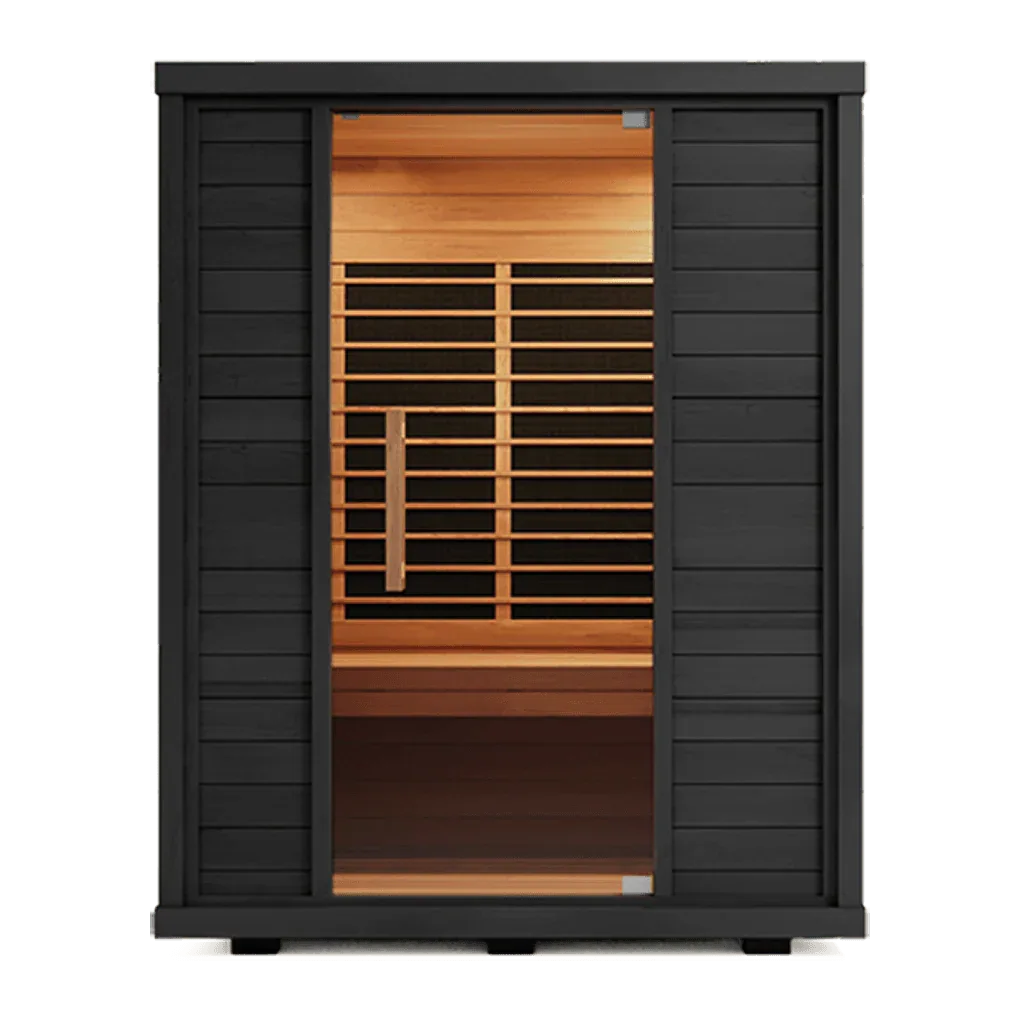
Imagine coming home after a demanding day, your mind exhausted and your muscles tense, seeking nothing more than the profound, deep-tissue recovery of your private Sun Home Solstice 4-Person Sauna. You open the SaunaLogic app to preheat the cabin so that its therapeutic, far-infrared warmth is ready the moment you step inside. But instead of a smooth activation, you are met with a spinning loading wheel and a frustrating "Connection Timeout" error. Your path to mental restoration is blocked not by a hardware defect, but by an invisible conflict of electromagnetic physics. The very architectural components that make an elite home sauna a high-performance thermal sanctuary, such as dense multi-layered wood, solid carbon heater elements, and advanced heat-reflecting insulation, simultaneously create a uniquely hostile environment for modern wireless routers. Understanding this relationship between thermal luxury and radio frequency engineering is the key to permanently reclaiming your smooth smart-sauna experience. Sun Home Saunas
Why the ESP32 Module Rejects 5 GHz: RF Front-End Architecture
The operational brain of the SaunaLogic controller is built around an ESP32 microcontroller module, a highly reliable and industry-standard chip engineered for Internet of Things (IoT) applications. From an engineering standpoint, the ESP32 features a physical RF front-end that is strictly limited to the 2.4 GHz frequency band (specifically conforming to IEEE 802.11 b/g/n standards). It physically lacks the dual-band mixing architecture, local oscillators, and integrated bandpass filters required to demodulate or transmit 5 GHz signals.
When a modern home router uses "band steering" to merge both 2.4 GHz and 5 GHz bands under a single network name (SSID), the router dynamically attempts to force high-bandwidth clients onto the 5 GHz spectrum to optimize network efficiency. Because the ESP32 cannot parse or respond to 5 GHz probe frames, it ignores the router's steering attempts. This incompatibility results in a terminal TCP handshake failure. When you attempt to initialize the sauna via your smartphone, the HTTP POST request to the cloud server times out because the physical hardware of the controller is trapped in a connection loop, trying and failing to negotiate with a dual-band network name that it cannot natively interpret.
The Physics of Steam: Moisture Attenuation and Wave Propagation
The environment inside and immediately surrounding an active far-infrared sauna is characterized by elevated temperatures and high absolute humidity. According to the International Telecommunication Union (ITU-R P.676) atmospheric absorption models, radio waves passing through moisture-laden air suffer signal attenuation due to the resonant absorption peaks of water molecules.
This attenuation is highly frequency-dependent. The 5 GHz frequency band has a shorter wavelength (~6 cm) which interacts more readily with suspended water vapor, suffering approximately 6 dB higher path loss compared to the 2.4 GHz band. The 2.4 GHz spectrum has a longer wavelength of approximately 12.5 cm. This longer physical wavelength allows the signal to bend around water droplets and pass through dense, humid air masses with minimal scattering. In simple terms, 2.4 GHz Wi-Fi acts like a fog light, cutting through the heavy, high-permittivity moisture boundary layer of your sauna sanctuary, while a 5 GHz signal is scattered and absorbed before it can reach the receiver.
The Shielding Effect: Far-Infrared Vapor Barriers as RF Obstacles
To deliver the therapeutic benefits of deep-penetrating far-infrared heat, premium cabins like the Sun Home Solstice 4-Person Sauna use advanced thermal engineering. A critical component of this design is an internal vapor barrier made of aluminized Mylar or high-grade foil insulation. This layer is designed to reflect far-infrared energy (which peaks at a wavelength of approximately 9.4μm in accordance with ISO 20473 spectral definitions) back into the cabin, maximizing thermal efficiency.
However, this reflective metallic barrier also acts as a partial Faraday shield. When high-frequency electromagnetic waves strike this conductive aluminum layer, they induce mirror-image currents that reflect the radio waves backward. This creates an impedance mismatch. For 5 GHz signals, this interface results in more than 10 dB of reflection loss, effectively blocking the signal from crossing the sauna wall. Conversely, the 12.5 cm wavelength of 2.4 GHz Wi-Fi maintains a significantly higher transmission coefficient, allowing enough residual signal to penetrate the wood-foil boundary and maintain a stable link with the ESP32 controller. Sun Home Saunas
Router Configuration: Disabling Band Steering and Isolating the SSID
The most effective resolution to SaunaLogic app connection errors is to isolate your 2.4 GHz and 5 GHz bands at the router level. When these bands share an identical SSID and password, the ESP32 controller is unable to successfully complete its WPA2 handshake.
To resolve this, access your router's administrative portal (usually accessible by entering 192.168.1.1 or 192.168.0.1 into a web browser). Navigate to the Wireless Settings menu and locate the setting labeled 'Band Steering', 'Smart Connect', or 'MIMO SSID Optimization'. Disable this feature. Once disabled, split your network into two distinct names, for example, 'MyHomeNetwork_5G' and 'MyHomeNetwork_2.4G'. Ensure that your smartphone is connected directly to the 2.4G network before opening the SaunaLogic app to execute the initial pairing sequence. This ensures the app transmits the correct frequency-matching credentials to the ESP32. Sun Home Saunas
Physical Placement: Antenna Polarization and Interference Mitigation
Electromagnetic interference (EMI) from the sauna's high-output carbon heaters can introduce radio frequency noise into the 2.4 GHz band. Because these heaters draw substantial current when active, they can emit minor electromagnetic harmonics. To shield your Wi-Fi link from this noise, physical positioning of both the router and the sauna controller antenna is critical.
Most IoT devices use vertically polarized antennas. To maximize signal reception, ensure that your router's external antennas are oriented vertically (pointing straight up). This aligns the polarization planes of the transmitter and receiver, preventing up to 3 dB of cross-polarization path loss. Also ensure your wireless router or access point is positioned at least 3 feet off the ground and, if possible, within a direct line of sight to the side of the sauna cabin where the main external controller housing is mounted.
Advanced Diagnostics: Packet Capture and ESP32 NVS Reset
For users who have split their network bands but still experience connectivity issues, the problem may lie in corrupted network credentials stored within the ESP32's Non-Volatile Storage (NVS) flash partition. During repeated failed setup attempts, the controller can write incomplete configuration files to its internal memory, leading to continuous boot-loop connection failures.
To clear this, perform a hard reset on the SaunaLogic controller by holding down the power button or pairing button on the physical control panel for 15 seconds. This forces the microcontroller to clear its NVS partition and restart in access point (AP) provisioning mode. If you wish to diagnose the network exchange further, you can run a packet capture utility like Wireshark on a laptop connected to the same network. Look for the DHCP Discover messages from the ESP32's MAC address; if you see the controller requesting an IP address but failing to receive a DHCP Offer, your router's firewall or MAC address filtering may be blocking the unit. Resetting the NVS partition clears these routing tables and allows a clean, stable WPA2 handshake.
Pros
- 2.4 GHz provides superior structural penetration through thick cedar walls and aluminized foil vapor barriers
- Wider coverage area and higher reliability in high-humidity microclimates
Cons
- Susceptible to co-channel interference from household appliances like microwave ovens and Bluetooth devices
- Does not support high-bandwidth 5 GHz networks, requiring manual router configuration if band steering is active
Technical Verdict
Fixing the SaunaLogic connection error requires understanding that 2.4 GHz Wi-Fi is physically superior at penetrating the sauna's reflective thermal vapor barriers and moisture-dense air. By splitting your network bands and aligning antenna polarization, you unlock stable, reliable smart-sauna control.
→ View Specs & Pricing