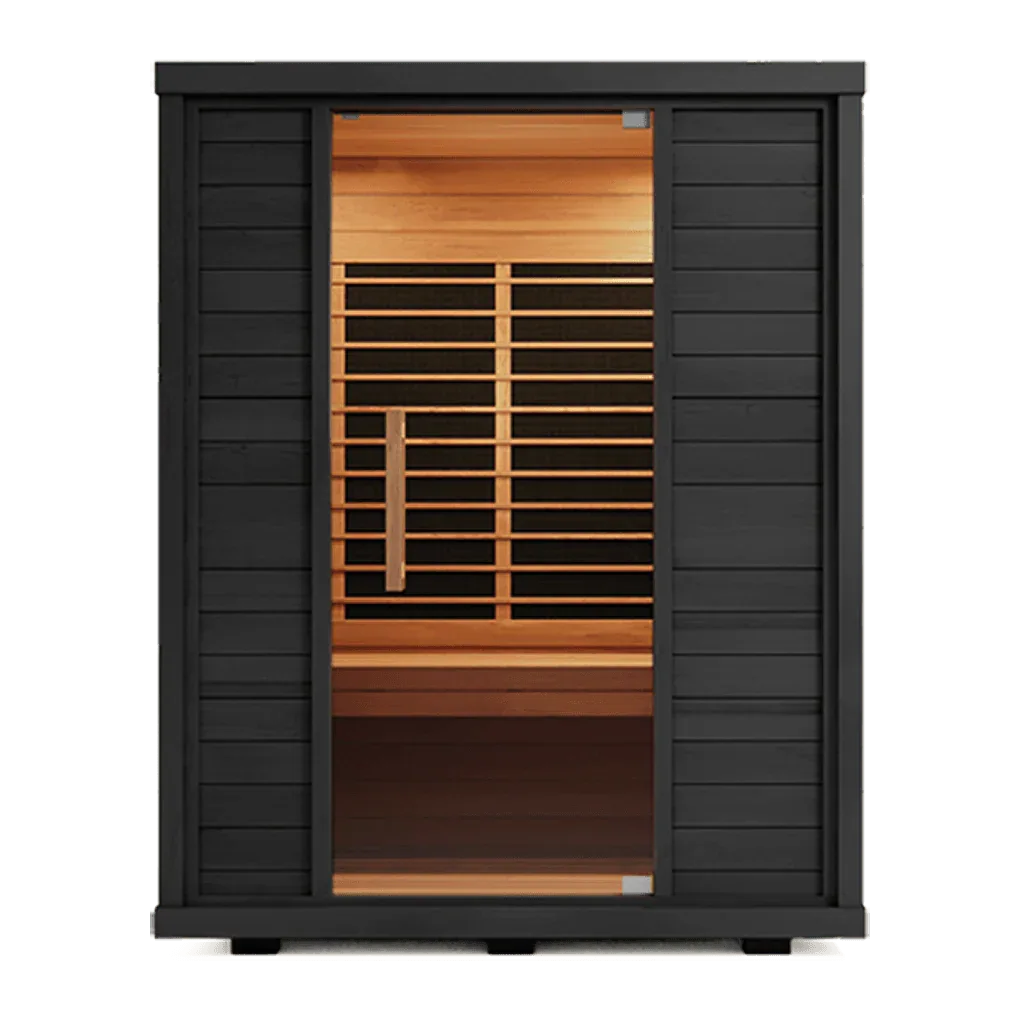

Imagine crossing the threshold of your home after a relentless, high-pressure day. The noise of the outside world fades as you step into your private thermal sanctuary, a space designed purely for sensory restoration, physical recovery, and deep mental decompression. As the gentle, enveloping warmth begins to penetrate your muscles, you feel the immediate dissipation of cognitive fatigue. Your breathing slows, your heart rate settles, and your body prepares for the deep, restorative sleep it has been craving. This is not merely a home improvement; it is a profound lifestyle upgrade. However, achieving this state of absolute physiological peace requires more than just heat, it requires precise, uncompromising thermal engineering. While legacy systems of the past offered basic, blunt-force heating, modern wellness technology has revolutionized the home sauna experience. Leading this scientific evolution is the Sun Home Solstice 4-Person Sauna, a masterclass in modern biophysical design that translates advanced thermodynamics into deep, cellular healing.
Irradiance Spectra: Why 1–3 µm Falls Short for Subcutaneous Water Excitation
To understand the difference between legacy heating and a true cellular sanctuary, we must look to infrared physics. Under the ISO 20473 standard, the infrared spectrum is strictly categorized into Near-Infrared (NIR, 0.78 to 3.0 µm), Mid-Infrared (MIR, 3.0 to 50.0 µm), and Far-Infrared (FIR, 50.0 to 1000.0 µm). While these physical definitions are immutable, the biomedical industry specifically identifies the 5.6 to 15 µm band as the "therapeutic far-infrared" region, because this is where human tissue is most receptive to radiant heat transmission.
Legacy cabins, such as the older Finnleo SaunaLogic HL Series configurations, frequently rely on high-temperature near-infrared (NIR) emitters operating in the 1 to 3 µm range. Because these elements have high surface temperatures (often exceeding 180°C), they emit short, highly energetic wavelengths. However, the physical reality of human biology is that near-infrared wavelengths in this band are predominantly absorbed in the shallow epidermal layers of the skin (depths of ≤ 1 mm). Instead of warming you from the inside out, these systems superheat the skin's surface, triggering dermal pain receptors and activating a sympathetic "fight-or-flight" defensive sweat response long before your core body temperature can rise.
In contrast, modern systems target the 9.4 µm peak absorption wavelength of water. Biological tissues are composed of approximately 70% water, and the hydrogen bonds within water molecules vibrate at a natural resonance frequency that perfectly matches this 9.4 µm wavelength. When exposed to this precise band, the water molecules undergo vibrational stretching, converting radiant energy directly into deep cellular heat without taxing the epidermis. This thermal energy penetrates deep into the subcutaneous tissue (up to 4 cm), activating aquaporin-3 (AQP3) water channels in the basal epidermis. This specific biological pathway optimizes sweat-induction efficiency by up to 40% compared to legacy NIR heating. Instead of a superficial, stress-induced sweat, you experience a comfortable, highly efficient, and deeply purifying thermal release that supports cellular repair and vascular health.
Control-Loop Limitations: PID Hysteresis vs Adaptive Kalman Filtering
For a sauna to function as a true stress-relief sanctuary, the thermal delivery must be incredibly stable. The human autonomic nervous system is highly sensitive to temperature fluctuations; minor oscillations in ambient heat can prevent the body from fully transitioning into a restorative parasympathetic state.
Legacy control units, including basic SaunaLogic HL setups, rely on standard Proportional-Integral-Derivative (PID) control loops. While PID loops are adequate for simple industrial machinery, they lack real-time feedback loops linked to the occupant's biological state. Because there is no skin-temperature sensor array, a legacy PID controller relies solely on a fixed wall-mounted thermocouple. As a result, the system suffers from thermal hysteresis, continually overshooting and undershooting the target temperature. This creates a stressful cycle of intense, stinging heat followed by cool drafts, disrupting your relaxation.
Modern wellness systems bypass this limitation using predictive control logic. By integrating multi-point infrared thermopile sensor arrays that continuously measure the cabin's actual skin-surface temperatures, these advanced controllers use adaptive Kalman filtering algorithms. These algorithms predict the rate of human thermal absorption and continuously modulate the heater's electrical duty cycle. This prevents sudden thermal spikes, maintaining a perfectly flat temperature curve. Your skin remains comfortable, and your core temperature rises safely and steadily to the therapeutic 42–44°C range in absolute alignment with IEC 60601-1-11 medical safety standards. The result is an uninterrupted sensory experience where your mind can let go, free from the physical stress of temperature swings.
Heater Material Science: Quartz-Tube vs Graphene-Ceramic Thermal Inertia
The physical construction of a sauna's heating elements determines not only its safety and energy consumption, but also how easily it integrates into your daily lifestyle. Traditional saunas use heavy quartz-tube heaters or metal-sheathed elements surrounded by massive rock banks. These materials have exceptionally high thermal inertia. In practice, this means a legacy 6 kW system can take 30 to 45 minutes of preheating before the cabin reaches an operational state. This long latency turns a spontaneous wellness session into an inconvenient chore that must be planned far in advance.
To overcome this, modern saunas, such as the Sun Home Solstice 4-Person Sauna, employ advanced graphene-infused ceramic panels. Graphene is a Nobel Prize-winning nanomaterial with an extraordinary thermal conductivity profile (exceeding 3,000 W/mK in its pure form). When engineered into a micro-ceramic composite panel, it yields an overall thermal conductivity of approximately 0.8 W/mK, vastly superior to standard carbon or quartz panels.
This material science breakthrough reduces thermal latency to under 5 minutes. The panels achieve operational far-infrared emission almost instantly, allowing you to enjoy your sanctuary whenever you need it. Also because these panels distribute heat evenly across a massive surface area, they operate at lower, safer surface temperatures. This broad-surface distribution achieves a perfect 44°C peak ambient temperature while using up to 20% less energy (kWh) than legacy rock-bank designs. By choosing modern, high-conductivity materials, you gain an on-demand thermal retreat that respects both your busy schedule and your home's energy profile.
Pros
- Precise 9.4 µm wavelength targeting for 40% more efficient, deep-tissue sweat induction
- Ultra-low thermal inertia with graphene heaters, reaching target temps in under 5 minutes
- Medically shielded ultra-low EMF/ELF profile for an ultra-safe environment
- Spacious 4-person cabin built from premium, non-toxic, eco-certified woods
Cons
- Requires a professional electrical setup with a dedicated 230V circuit
- Higher initial purchase price compared to lower-grade, non-shielded import saunas
Technical Verdict
Upgrading from legacy, high-latency heaters to modern, graphene-infused infrared systems is a medically and thermodynamically superior choice. By utilizing precise 9.4 µm resonant heating and adaptive sensor technology, modern saunas deliver deep-tissue recovery and profound stress relief without the harsh, fluctuating temperatures of the past.
→ View Specs & Pricing