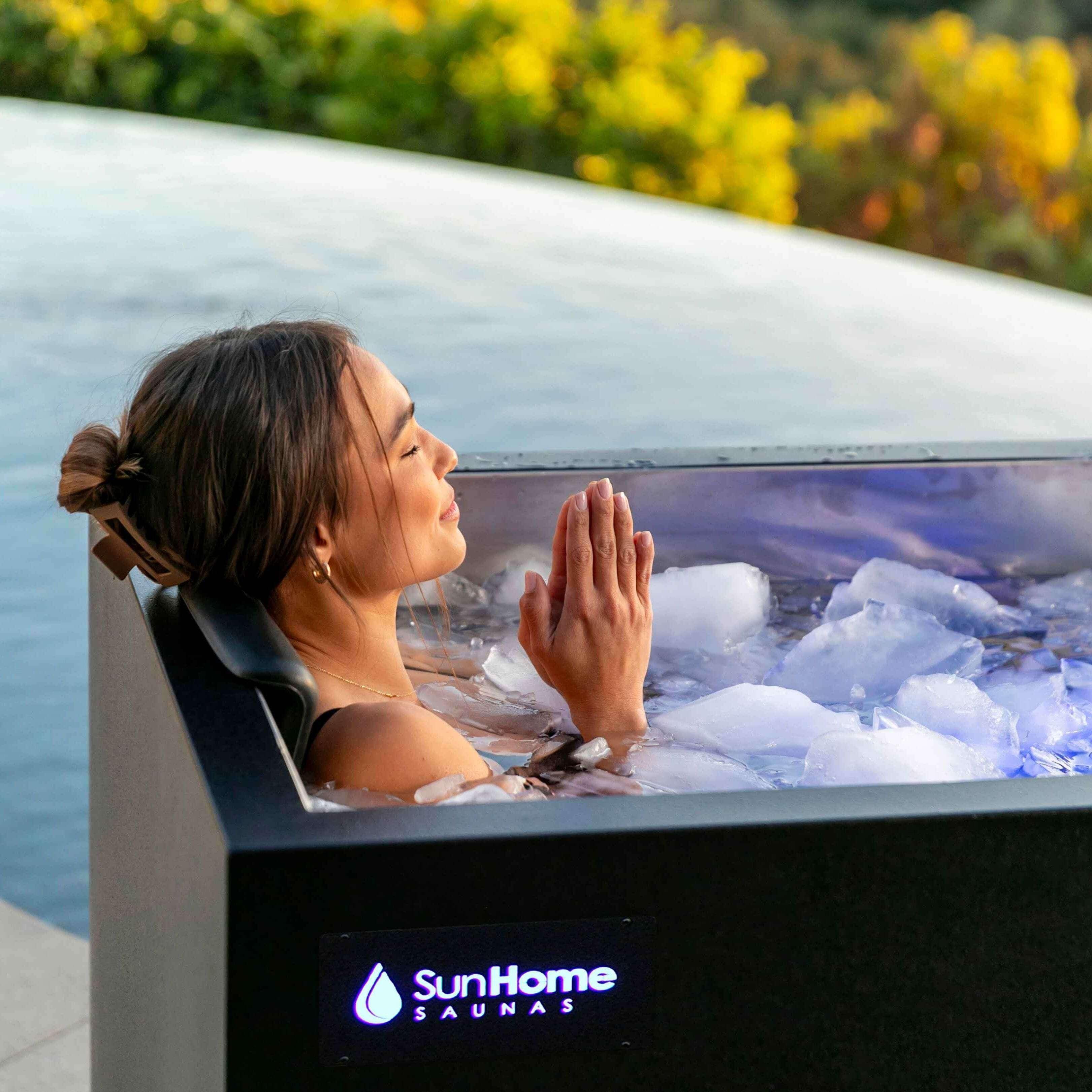

Choose a cold plunge tub with active water circulation rather than a passive basin of stagnant water. Body heat quickly warms the water touching the skin, forming a thermal boundary layer that reduces the temperature gradient and slows further cooling. Strategic pump-driven agitation breaks this insulation and maintains a more constant cooling rate.
Convective Dynamics and the Thermal Boundary Layer
The primary shortcoming of passive cold tubs lies in a failure to account for basic fluid dynamics. When you submerge your body into stagnant cold water, a phenomenon known as the thermal boundary layer occurs. Your body naturally radiates heat, warming the micro-layer of water immediately adjacent to your skin. Because water has a high specific heat capacity, this stagnant envelope acts as an insulating sleeve, drastically reducing the temperature gradient ($\Delta T$) between your skin and the water.
To bypass this insulation and maintain a constant cooling rate, the boundary layer must be continuously disrupted. According to Newton's law of cooling ($q = h \cdot A \cdot \Delta T$), the heat transfer rate ($q$) is directly proportional to the convective heat transfer coefficient ($h$). In stagnant water, $h$ ranges from 50 to 100 W/m²K. By introducing strategic, pump-driven water agitation, we can transition the fluid flow from laminar to turbulent. This transition occurs when the Reynolds number ($Re$) exceeds 4,000, raising the convective heat transfer coefficient by up to 10 to 20 times that of air. This ensures that your skin is constantly exposed to the true target temperature, maximizing the rate of core thermal energy dissipation.
Insulation Material Science: Closed-Cell Foam vs EPS
Maintaining a precise, near-freezing environment inside a home sanctuary requires exceptional thermal barrier engineering. Lower-tier plunges often use Expanded Polystyrene (EPS) or cheap air-gap insulation, both of which suffer from high thermal conductivity and rapid degradation over time. EPS easily absorbs ambient moisture, which degrades its performance and forces the cooling system to run constantly to maintain target temperatures.
In contrast, high-end therapeutic cold plunges use high-density, closed-cell polyurethane foam with an R-value exceeding 4.0 per inch. The microscopic, gas-filled cells of polyurethane prevent water vapor penetration and dramatically lower the system's passive thermal drift coefficient. This structural integrity ensures that the chiller operates with maximum efficiency, drawing minimal power while keeping the water at an exact, therapeutic temperature. This medical-grade insulation ensures your sanctuary is quiet, efficient, and ready to use at a moment's notice.
Human Thermoregulation and BAT Activation
The metabolic benefits of cold therapy are rooted in the activation of Brown Adipose Tissue (BAT). Unlike white fat, which stores excess energy, BAT contains a high density of mitochondria rich in Uncoupling Protein 1 (UCP1). When triggered by cold exposure, UCP1 short-circuits the mitochondrial proton gradient, dissipating energy as heat through non-shivering thermogenesis.
To initiate this metabolic cascade, your skin temperature must be kept below 15°C (59°F). This threshold triggers systemic norepinephrine release, up-regulating UCP1 gene expression and accelerating lipid metabolism. Also the rate of temperature drop ($dT/dt$) determines the expression of vital cold-shock proteins, specifically Cold-Inducible RNA-Binding Protein (CIRBP) and RNA-Binding Motif Protein 3 (RBM3). These proteins play key roles in neuroprotection, cellular repair, and muscle preservation. A system that cannot maintain a stable temperature gradient under thermal load will fail to trigger these critical pathways.
Active Chiller Sizing and Thermal Drift
A cold plunge is only as reliable as its cooling engine. When a human body at approximately 37°C (98.6°F) enters a 400-liter pool of cold water, it introduces a significant thermal load. Without a high-capacity, active chilling system, the water temperature will spike, muting the physiological benefits for the remainder of the session.
To maintain thermal stability, premium plunges are equipped with powerful, commercial-grade compressors rated at 1/2 HP to 1 HP, delivering up to 7,500 BTU/hr of cooling power. This engineering allows the system to counter the human thermal load in real time, maintaining a stable temperature throughout your session. Combined with a low passive drift coefficient, this high cooling capacity ensures the water stays cold and clean day after day.
Investing in a Lifetime of Flawless Recovery
Integrating a high-performance cold plunge into your home is an investment in your long-term health, mental clarity, and vitality. While the technical specifications highlight the rigorous engineering behind these systems, the true value lies in the daily transformation they provide, the immediate shift from stress to calm, the deep restorative sleep, and the sustained focus that carries you through the day.
To make this lifestyle upgrade as smooth as possible, premium systems offer complete risk reversal. With flexible financing options starting as low as $199/month, comprehensive multi-year warranties, and free shipping directly to your home, there is no barrier between you and the ultimate recovery experience. Step into your private sanctuary and discover what your body is truly capable of when backed by uncompromising science.
Frequently Asked Questions
Why is water circulation or agitation important in a cold plunge tub?
In stagnant water, your body naturally radiates heat and creates a thermal boundary layer of warm water next to your skin, which acts as an insulating sleeve and slows down cooling. Introducing pump-driven water agitation disrupts this insulating layer by transitioning the water flow from laminar to turbulent. This transition raises the convective heat transfer coefficient by up to 10 to 20 times that of air, ensuring your skin is constantly exposed to the true target temperature.
How does closed-cell polyurethane foam compare to EPS insulation for cold plunges?
Expanded Polystyrene (EPS) degrades quickly over time and easily absorbs ambient moisture, forcing the chiller to run constantly to maintain temperatures. In contrast, high-density, closed-cell polyurethane foam features an R-value exceeding 4.0 per inch and blocks water vapor penetration. This significantly lowers the system's passive thermal drift, allowing the cooling engine to run efficiently while drawing minimal power.
At what temperature do the metabolic benefits of a cold plunge begin?
To activate Brown Adipose Tissue (BAT) and start the metabolic cascade, your skin temperature must be kept below 15°C (59°F). Reaching this threshold triggers a systemic release of norepinephrine, up-regulates critical genes, and accelerates lipid metabolism. Also a rapid drop in temperature determines the expression of vital cold-shock proteins that assist with neuroprotection, cellular repair, and muscle preservation.
What size chiller compressor is needed to keep the water temperature stable?
When a human body at approximately 37°C (98.6°F) enters a 400-liter pool, it introduces a significant thermal load that can cause water temperature to spike. To combat this, premium cold plunges use powerful, commercial-grade compressors rated at 1/2 HP to 1 HP, which deliver up to 7,500 BTU/hr of cooling power. This allows the system to counter the human heat load in real time and maintain a stable, therapeutic temperature.
What financing and warranty options are available for home cold plunges?
Premium
Related Reading
- Buy Premium Home Cold Plunge Tubs for Wellness
- How Cold Plunge Tubs Speed Athlete Muscle Recovery
- Sun Home Cold Plunge Smart Chiller Review and Guide
- Shop Premium Professional Cold Plunge Tubs for Sale
Related reading:
- Why Colder Is Not Better for Cold Plunges
- Best Luxury Home Ice Bath Tubs for Cold Therapy
- True North vs Sun Home Cold Plunge: Price and Cooling Power Comparison
Related reading:
Pros
- Continuous jet circulation eliminates the thermal boundary layer for optimal cold transfer.
- Medical-grade closed-cell polyurethane insulation prevents energy drift and lowers operating costs.
- High-output 1 HP chiller maintains exact temperature targets even under heavy thermal loads.
Cons
- Higher initial investment compared to passive, non-insulated tub options.
- Requires dedicated electrical placement to support the high-capacity compressor.
Technical Verdict
By pairing a high-volume circulation system with a commercial-grade 1 HP chiller and closed-cell polyurethane insulation, this system successfully prevents boundary layer insulation and limits passive thermal drift. The resulting thermal performance triggers the biological pathways essential for deep recovery, stress reduction, and metabolic health.
→ View Specs & Pricing