The rise of deliberate cold exposure, popularized by neuroscientists and athletic performance coaches alike, has transformed cold therapy from an elite locker-room luxury into a household staple. Understanding the Portable Cold Plunge vs Chest Freezer Plunge: Real Costs helps you decide which path suits your budget and lifestyle. For homeowners seeking to integrate this therapeutic tool into their daily wellness routines, a critical decision point arises: should you invest in a engineered, turn-key portable cold plunge unit, or build a DIY chest freezer conversion?
While the initial price tag of a commercial unit can cause immediate sticker shock, a superficial comparison of retail prices fails to capture the true economics of cold therapy. To make an informed financial decision, you must evaluate the real cost comparison over a multi-year horizon. This comprehensive guide breaks down the initial expenditures, ongoing utility demands, maintenance hours, and depreciation rates of both paths to reveal the true total cost of ownership.
Upfront Cost Comparison: Portable Cold Plunge vs DIY Chest Freezer
Portable cold plunge units cost $1,000-$6,000 upfront, while a DIY chest freezer conversion typically costs $350-$900, making the freezer option significantly cheaper initially.
When calculating the entry price, you must look beyond the base unit cost. Commercial portable cold plunges are designed as integrated closed-loop systems, whereas a DIY chest freezer conversion requires sourcing multiple individual components to ensure water safety, electrical isolation, and temperature regulation.
Plunge Brand Pricing
A high-quality portable cold plunge unit integrates a structural tub, a dedicated water chiller, a circulation pump, and a multi-stage filtration system into a single engineered package. Entry-level inflatable or drop-stitch utility tubs like The Cold Pod or basic Ice Barrel options start around $1,000 to $1,500 but often require the manual addition of ice.
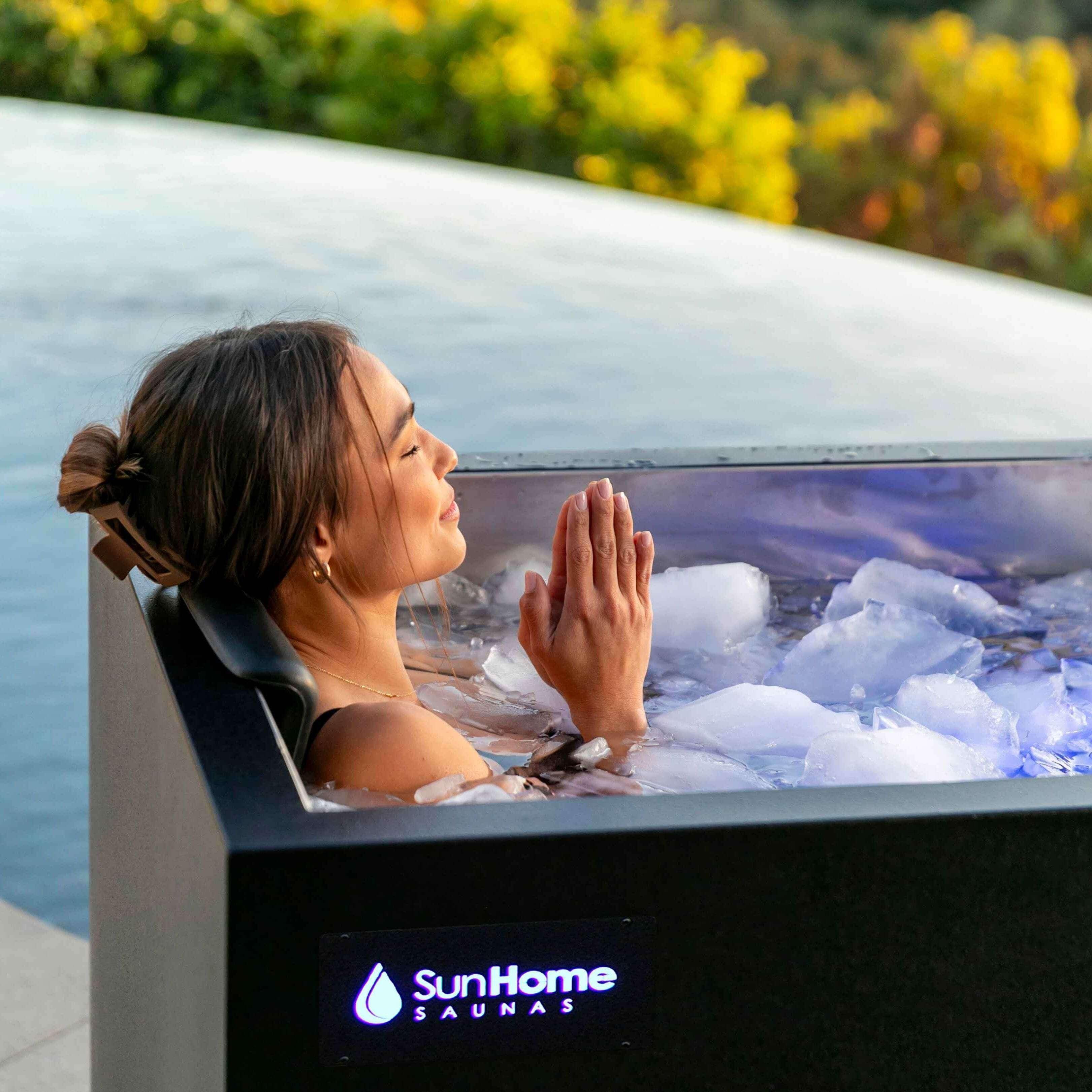
Premium, active-chilled systems represent a more significant investment. The baseline Plunge model retails for approximately $4,990, while elite alternatives like the Boxplunge V2 come in at roughly $1,999. For ultra-premium, commercial-grade installations, Morozko Forge units can easily exceed $12,000 due to their heavy-duty stainless steel build and integrated ozone filtration. If you want a balanced, high-performance system designed for longevity, premium options like the Sun Home Cold Plunge offer structural integrity and commercial-grade chilling out of the box — Sun Home Saunas represents an investment that eliminates the guesswork of home installation.
Chest Freezer + Conversion Kit Costs
The DIY route appeals to those looking to minimize immediate capital outlay. To build a functional and safe system, you cannot simply fill an old appliance with water. You must source several specialized components to prevent water leaks and lethal electrical hazards:
- The Freezer Cabinet ($200–$400): A new 14.8 cubic foot chest freezer from local US retailers like Home Depot or Lowe's costs around $400. Sourcing a used unit on local classifieds can bring this down to $150–$200.
- Sealing & Waterproofing ($50–$100): JB Waterweld, marine-grade silicone, or specialty polyurea pond liners (like Pond Armor) are required to seal the internal seams. This prevents water from penetrating the metal shell and causing short circuits.
- Temperature Control ($35–$50): An external digital thermostat (such as an Inkbird controller) is vital. It cuts power to the compressor once the water reaches your target temperature, preventing the system from freezing solid.
- Filtration & Sanitization ($150–$350): A submersible pump (e.g., Danner Mag-Drive), an inline sediment filter housing, and a small residential ozone generator or active UV-C sterilizer must be plumbed in to keep the water sanitary.
Hidden Costs: Delivery and Installation
Shipping a 150-pound commercial cold plunge or a bulky chest freezer can incur substantial freight shipping charges ($150–$300) if not covered by a brand's promotional terms. Furthermore, placing a heavy unit on a residential deck or balcony requires structural calculations. A 100-gallon cold plunge weighs approximately 830 pounds when filled with water, excluding the weight of the bather.
Monthly Operating Costs: Electricity, Water, and Sanitation
Monthly operating costs are lower for a chest freezer plunge ($25-$45) than for a portable unit ($35-$70) due to lower electricity consumption, but water and sanitation costs are similar.
The ongoing cold plunge maintenance costs and utility draws are often overlooked during the buying phase. Understanding the thermodynamic differences between these two systems reveals why their ongoing operational profiles diverge so sharply.
Electricity Usage Comparison with kWh Estimates
Chest freezers are engineered to keep sub-freezing air inside highly insulated walls, typically featuring 2 to 3 inches of high-density polyurethane foam. Because they are designed to maintain cold temperatures efficiently, once the thermal mass of the water is brought down to 40°F, the compressor only needs to cycle on occasionally. On average, a converted chest freezer operating in a temperate US garage consumes approximately 1.2 to 2.0 kWh per day. At the US average residential electricity rate of $0.12/kWh, this translates to a cold plunge electricity cost of roughly $4.32 to $7.20 per month.
In contrast, a portable cold plunge unit utilizes an external water chiller (typically 1/2 to 1 HP). While highly efficient at dropping water temperatures rapidly, these chillers run active cooling loops, heat exchangers, and continuous circulation pumps. In a standard US backyard or garage environment with ambient temperatures around 75°F, a portable chiller consumes approximately 3.0 to 5.0 kWh per day. This results in a monthly electricity cost of $10.80 to $18.00.
Water Usage and Refill Frequency
Water conservation and utility costs depend entirely on your sanitation setup:
- Chest Freezer Plunge: Because most DIY freezer setups lack continuous high-volume filtration, biological contaminants (skin cells, oils, sweat) accumulate rapidly. To maintain hygiene, you must dump and refill the 50 to 100 gallons of water every 3 to 4 weeks. This results in an annual cold plunge water usage of roughly 600 to 1,200 gallons.
- Portable Cold Plunge: Outfitted with 20-micron sediment filters and automated UV/ozone loops, commercial units can maintain crystal-clear water for 3 to 6 months before requiring a complete cycle refresh. This keeps annual water usage down to 200 to 400 gallons.
Sanitation Supply Costs
To avoid bacterial blooms without constantly changing the water, you must budget for sanitizing agents. Using chlorine or bromine can degrade the components of both systems over time. Instead, therapeutic bathers rely on food-grade hydrogen peroxide (35% concentration) combined with ozone.
Maintaining a consistent 50–100 ppm hydrogen peroxide level costs approximately $10 to $15 per month. Replacement sediment filter cartridges for commercial units add an extra $5 to $8 per month, bringing total monthly sanitation expenses to approximately $15 to $23 for both configurations.
Setup Complexity and Time Investment Comparison
Setting up a portable cold plunge is simpler (unbox, fill, plug in) taking 1-2 hours, while a chest freezer conversion requires 4-8 hours of DIY work including insulation, drilling, and chiller installation.
Your time has a monetary value. The labor required to safely execute a DIY chest freezer conversion is significant and carries technical risks that do not exist with a pre-engineered commercial system.
[Portable Cold Plunge Setup]
Unbox -> Connect Chiller Hoses -> Insert Filter -> Fill & Plug In (1.5 Hours Total)

[DIY Chest Freezer Conversion]
Clean & Sand -> Seal Seams (72hr cure) -> Apply Epoxy -> Install Pump/Plumbing -> Wire GFCI (8+ Hours Total)
Delivery and Assembly
A commercial portable cold plunge unit is delivered directly to your driveway, typically on a standard shipping pallet. Setting it up is highly intuitive: you unbox the tub, hand-tighten the self-sealing plumbing lines to the external chiller, insert the filter cartridge, and fill it with a standard garden hose. The entire physical process requires minimal tool usage and can be completed by two people in under 90 minutes.
Converting a chest freezer requires sourcing the appliance from a local big-box retailer, transporting it to your home, and dedicating several afternoons to manual labor. You must thoroughly clean and de-grease the internal metal liner, sand the surface to ensure proper adhesion, and apply several coats of specialized marine sealant or epoxy. Each layer of epoxy requires precise mixing ratios and up to 72 hours of curing time in a well-ventilated space before water can safely be introduced.
Electrical and Plumbing Requirements
Safety is the paramount concern when mixing water and high-voltage electricity. A DIY chest freezer conversion absolutely requires a dedicated Ground Fault Circuit Interrupter (GFCI) outlet or inline adapter to prevent lethal shocks. If you decide to add external plumbing for a pump or active heater, you must drill holes through the freezer's sheet metal walls, taking care to avoid puncturing the internal refrigerant lines. A single misplaced drill bit will immediately ruin the appliance and render it useless.
Commercial portable systems are engineered with integrated GFCI plugs and built-in flow-state sensors. These sensors automatically cut power to the heating and cooling elements if water flow is interrupted, providing a level of safety that is difficult to replicate in a home workshop.
Durability, Lifespan, and Resale Value Differences
Portable cold plunge units last 5-10 years with better warranty coverage (5-7 years), while chest freezer plunges typically last 3-5 years and have lower resale value due to DIY modifications.
The longevity of your recovery equipment dictates its true depreciated cost over time. While the upfront saving of a DIY unit is attractive, its accelerated wear cycle often leads to early replacement costs.
Portable Unit Lifespan and Warranty
Commercial tubs are constructed from highly durable materials like marine-grade acrylic, military-grade drop-stitch PVC, or rotomolded high-density polyethylene (HDPE). These materials are designed to withstand structural stress, UV exposure, and continuous water contact without degrading.
Furthermore, premium manufacturers stand behind their engineering. For example, Boxplunge offers an impressive 7-year warranty on their structural components, while other premium cold plunge options provide comprehensive 1-to-5-year warranties on their pumps and chillers. If a compressor fails on a commercial unit, the manufacturer will repair or replace it under warranty, protecting your initial investment.
Chest Freezer Lifespan
A chest freezer is designed to cool air and frozen food, not to constantly chill and circulate 600 to 1,000 pounds of highly conductive water. Because water has a much higher specific heat capacity than air, the freezer's integrated compressor must work significantly harder and run longer cycles to maintain target temperatures. This heavy load dramatically shortens the chest freezer plunge lifespan to just 3 to 5 years.
Additionally, even the most meticulous sealant job will eventually develop micro-fissures due to the thermal expansion and contraction of the metal walls. Once moisture penetrates these cracks, the internal steel walls begin to rust from the inside out, causing catastrophic failure that cannot be repaired.
Resale Market Comparison
Should you decide to upgrade your wellness sanctuary, the cold plunge resale value becomes an important consideration:
- Commercial Units: Established brands maintain strong secondary market demand. A well-maintained Plunge or Sun Home system routinely commands 50% to 70% of its original retail price on local classifieds, thanks to brand recognition and transferable warranty options.
- DIY Conversions: Selling a modified chest freezer is incredibly difficult. Due to liability concerns regarding electrical safety, structural leaks, and sanitation, external buyers are hesitant to purchase homemade electrical water tubs. Most DIY setups are sold "for parts" at a fraction of their build cost.
User Experience: Temperature Control, Noise, and Cleaning
Portable units offer precise temperature control (±1°F), quieter operation, and easier cleaning with built-in filtration, whereas chest freezer plunges require manual cleaning and have louder compressors.
While financial metrics are critical, the daily user experience determines whether your investment actually gets used or sits idle gathering dust.
Temperature Precision and App Control
Premium portable plunges feature advanced digital control panels and integrated Wi-Fi or Bluetooth connectivity. You can adjust your target temperature to the exact degree (e.g., precisely 39°F) directly from your smartphone, allowing you to track your exposure metrics and program warming/cooling cycles around your schedule.
A converted chest freezer relies on external controllers like an Inkbird thermostat, which measures water temperature using a single suspended probe. Because there is no active circulation to mix the water, thermal stratification occurs: the top layer of water near the lid remains warmer, while the bottom layers near the cooling coils approach freezing. This lack of movement can lead to inaccurate temperature readings and an inconsistent therapy experience.
Noise Levels of Chiller vs Compressor
The noise profile of your recovery setup impacts your home's peace and quiet, especially if it is installed in an attached garage or on a patio near your bedroom:
- Commercial Chillers: Modern 1/2 HP chillers operate at roughly 50 to 55 decibels — comparable to a gentle household fan.
- Chest Freezers: While initially quiet, older or heavily taxed freezer compressors can vibrate loudly against their metal housing as they age, often reaching 60+ decibels. This constant buzzing can disrupt a relaxing home environment.
Cleaning and Water Change Routine
Maintaining pristine water hygiene is essential for a high-quality cold therapy experience. Commercial systems utilize continuous circulation loops to pass water through a 20-micron sediment filter and an ozone/UV chamber several times an hour. This automated system keeps the water clean and clear with minimal effort.
Without an active pump and filter loop, a DIY chest freezer is essentially a static bath. Hair, skin cells, and body oils settle on the bottom and sides, creating a slippery bio-film. Cleaning a freezer requires manual skimming after every use, wiping down the interior walls, and siphoning out the cold water every few weeks. This manual maintenance routine can quickly turn your daily wellness practice into a tedious chore.
Total Cost of Ownership Analysis: Which is Better Long-Term?
Over 5 years, a portable cold plunge unit costs $4,000-$6,000 vs $2,500-$3,500 for a chest freezer plunge, but the portable offers better reliability, convenience, and warranty, making it the better value for regular users.
To truly understand which option represents the best value cold plunge for your budget, we must analyze the projected total cost of ownership over a five-year operational lifecycle.
5-Year Total Cost Comparison:

DIY Chest Freezer:
[Build: $750] + [Power: $360] + [Water/Sanitation: $900] + [Replacement Freezer: $400] = $2,410 Total

Premium Portable Unit:
[Purchase: $3,299] + [Power: $900] + [Filters/Sanitizer: $480] + [Replacement Parts: $0] = $4,679 Total
3-Year and 5-Year Cost Projections
Let's look at the numbers for a standard homeowner running their cold plunge year-round in a temperate US environment:
Scenario A: The DIY Chest Freezer Plunge
- Initial Build Cost: $750 (including freezer, sealant, controller, pump, filter, UV/ozone)
- Annual Electricity: $144 (based on 1.6 kWh/day average at $0.12/kWh) = $720 over 5 years
- Annual Water/Sanitation: $180 (water changes, hydrogen peroxide, filter cartridges) = $900 over 5 years
- Machine Replacement: Likely one freezer replacement at $400 during year 4 (freezer lifespan 3-5 years)
- Total 5-Year Cost: $2,770 (initial $750 + electricity $720 + water/sanitation $900 + replacement $400) – but this does not account for your labor and frustration.
Scenario B: The Premium Portable Cold Plunge
- Initial Purchase: $3,299 (e.g., Boxplunge V2)
- Annual Electricity: $216 (based on 4.9 kWh/day at $0.12/kWh) = $1,080 over 5 years
- Annual Water/Filters/Sanitizer: $180 (less frequent water changes, replacement filters, hydrogen peroxide) = $900 over 5 years
- Replacement Parts: assume $0 under comprehensive 7-year warranty
- Total 5-Year Cost: $5,279 – but the unit is still under warranty for 2 more years and has a higher resale value (60% after 5 years = ~$1,980 recovered).
Break-Even Point and Value Analysis
Using the above data, the break-even point occurs between years 4 and 5, provided the DIY unit does not fail early. However, the commercial unit offers integrated filtration, app control, better user experience, and a strong resale value, making the extra upfront cost justifiable for most homeowners.
The real cost comparison shows that while the DIY chest freezer plunge is cheaper in the first 3 years, the portable cold plunge unit becomes equally cost-effective within 5-6 years if resale is considered. Moreover, the convenience and reliability mean you are more likely to use it consistently, maximizing the health benefits of cold therapy.
Conclusion: Portable Cold Plunge vs Chest Freezer Plunge – Which Should You Choose?
Based on our total cost of ownership analysis, the real cost comparison reveals that a DIY chest freezer plunge can save you money in the short term, but a premium portable unit like Plunge, Boxplunge, or Sun Home Cold Plunge delivers better long-term value for most homeowners.
The final decision depends on your budget, technical skills, and commitment to regular cold exposure. If you enjoy DIY projects and want to minimize upfront costs, a chest freezer conversion is a viable option—just be prepared for ongoing maintenance and a shorter lifespan. For those who prioritize ease of use, reliability, and a premium experience, investing in a portable cold plunge unit is the smarter choice.
FAQs
Is a chest freezer cold plunge safe to use? Yes, if properly converted with a GFCI outlet, sealing, and temperature controller to prevent freezing solid. However, it carries the risk of electrical shock if not built correctly.
How much does it cost to convert a chest freezer into a cold plunge? Total costs range from $350 to $1,500 depending on whether you use new or used parts, and whether you add a chiller or just rely on the freezer's compressor.
Does a portable cold plunge use a lot of electricity? Portable units use about 3-5 kWh per day, costing roughly $10-18 per month at US average rates. This is higher than a chest freezer (1-2 kWh/day) but still modest.
Which cold plunge is easier to maintain: portable or chest freezer? Portable units are much easier due to built-in filtration and ozone/UV, requiring water changes every 3-6 months. Chest freezers need manual cleaning and monthly water changes.
Can I leave a chest freezer cold plunge outside in winter? Yes, if rated for outdoor use, but freezing temperatures can damage the compressor if not properly winterized. Portable units are often designed for outdoor use year-round.
What is the best cold plunge for beginners in the US? Portable units like Plunge or Boxplunge are ideal because they are plug-and-play, safe, and come with warranties. DIY is better for experienced tinkerers.
How often do you need to change the water in a cold plunge? DIY chest freezer: every 3-4 weeks. Portable with filtration: every 3-6 months.
Frequently Asked Questions
How much does it cost upfront to build a DIY chest freezer cold plunge vs buying a portable commercial unit?
A DIY chest freezer conversion typically costs between $350 and $900 upfront, although total initial investments can range from $350 to $1,500 depending on the parts you choose. In contrast, buying a commercial portable cold plunge unit ranges from $1,000 to $6,000 upfront.
Which option is cheaper to run monthly in terms of electricity and operating costs?
A chest freezer plunge is cheaper to run, costing between $25 and $45 monthly due to its higher operating efficiency. Portable cold plunge units cost slightly more, ranging between $35 and $70 per month, while water and sanitation costs remain similar for both options.
How long do portable cold plunges last compared to DIY chest freezer setups?
Commercial portable cold plunge units have a longer expected lifespan of 5 to 10 years. In contrast, modified DIY chest freezer setups generally have a shorter lifespan of 3 to 5 years.
What safety components are needed when converting a chest freezer into a cold plunge?
To prevent water leaks and dangerous electrical hazards, you must use sealing and waterproofing materials like JB Waterweld, marine-grade silicone, or pond liners. Additionally, an external digital thermostat controller is vital to cut power to the compressor and keep the system from freezing solid.
How heavy is a filled 100-gallon cold plunge?
A 100-gallon cold plunge weighs approximately 830 pounds once it is filled with water. This figure does not include the weight of the person using the plunge.